+1 309 791 4105

 hyperlink.infosystem














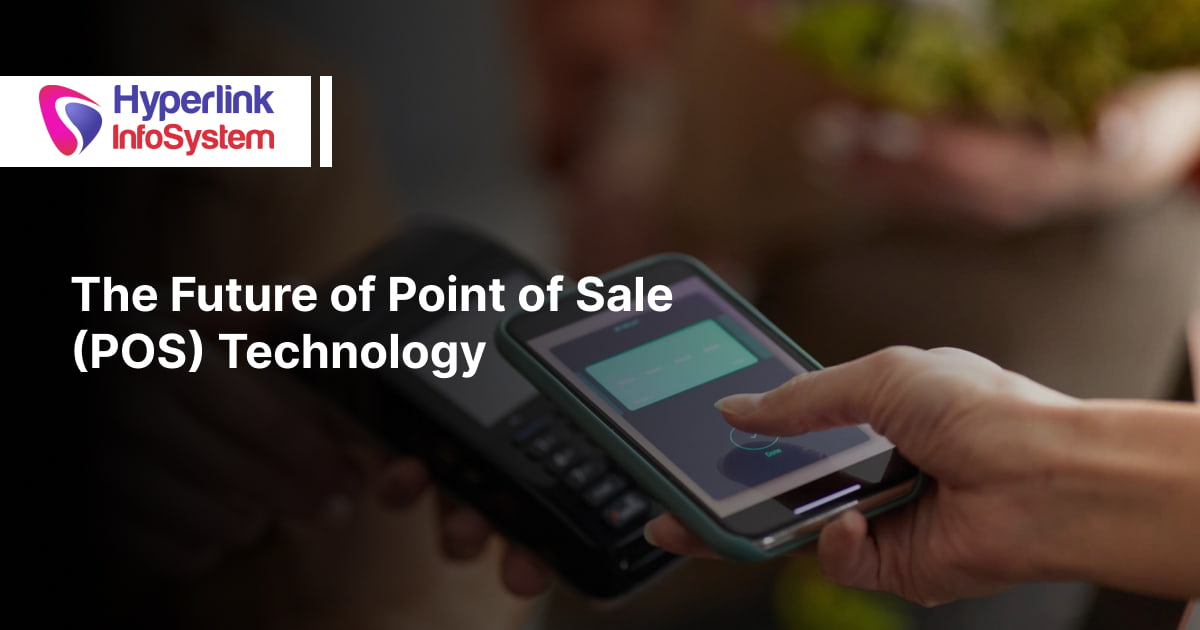

POS system development has grown from simple billing tools into the "brains" of a business, shaping how customers shop and how brands perform. Many businesses still battle clunky data, slow lines, and zero visibility. Modern POS tech fixes this by blending real-time insights with cloud flexibility and easy integrations. This blog explores how better architecture creates smoother customer journeys and stress-free operations. The purpose of this white paper is to outline the technical foundation, integration, and security requirements necessary for developers and leadership to create a successful point-of-sale solution that thrives within today’s digital economy.
Introduction
Customer expectations regarding speed, personalization, and reliability are greater than ever before. Companies can't depend on traditional point-of-sale systems anymore as the volume of transactions has significantly increased, and customers expect to interact with multiple channels. Due to advancements in technology and improvements to customer experiences, POS system development is now a mix of customer experience, data engineering, and operational automation; therefore, developers and technology executives need to understand how to design these systems. From cloud-native backends to real-time data processing, modern POS platforms are built to scale. This article breaks down the technical elements behind today’s POS solutions and explains how they deliver measurable business value.
Modern POS Architecture: From Terminal to Cloud
Today’s POS systems are no longer standalone devices. They are distributed applications designed around cloud-first principles. A typical architecture includes front-end terminals, middleware services, cloud databases, and analytics engines.
Key architectural components include:
- Client interfaces such as web-based terminals or mobile apps
- API layers for inventory, pricing, and customer data
- Cloud-hosted databases for real-time synchronisation
This design ensures consistent data across locations and channels. With a microservices architecture, developers can scale each module or component independently. Many businesses that create their POS Platform using a trusted software development company are now using this approach to ensure their POS Platform is scalable for the future and to reduce their overall technical debt.
Available Data to Improve Customer Experience
With improved POS technology today, real-time transactional data is captured and shared from different points of sale (POS) through the Internet. This creates an opportunity for faster checkouts, accurate prices, and personalized deals.
The technical basis of event-driven processing is very important because each transaction generates the events that immediately update Inventory, Loyalty, and Analytics Dashboards. Many developers use Message Queues or Streaming Platforms to achieve very low latency.
In terms of customer experience, this results in reduced wait times and relevant recommendations for customers; for businesses, actionable insights can now be obtained without the need to conduct time-consuming manual research. Robustly designed Data Pipelines are a fundamental part of creating a responsive and customer-centric Point Of Sale (POS) System.
Operational Efficiency Through Automation and Integration
Operational complexity increases as businesses grow. Manual reconciliation, disconnected systems, and delayed reporting slow down decision-making. POS platforms address this by acting as a central operational hub.
Integrations commonly include:
- ERP systems for financial reporting
- CRM platforms for customer profiles
- Third-Party Supply Chain Tools for Demand Planning
To facilitate these integrations, organisations must have both a secure API and a standardised data model. Many organisations will hire software developers to create and modify the integration of supply chain tools with internal workflows. With automated processes, organisations can reduce human error and allow their team members to concentrate on more productive and higher-value tasks instead of performing repetitive operational tasks.
Security, Compliance, and Reliability Considerations
POS systems contain sensitive information on both customers and payments, thus security must be a primary concern for any developer. They must therefore implement solutions that meet the requirements of the applicable industry while also providing acceptable levels of performance.
Core security practices include:
- End-to-end encryption for transactions
- Role-based access control for staff
- Secure tokenisation of payment details
The importance of Reliability is just as critical as offline-first capabilities that allow for continued transactions during periods of Network Disruption. After a Network Disruption, synchronization processes reconcile data once Network Connectivity is restored. The Design Choices around this functionality protect Revenue Streams and Customer Trust, particularly within high-volume environments.
Scalability and Future-Ready POS Platforms
The advent of new technologies such as cloud infrastructure, containerisation, and continuous deployment pipelines allows developers to build scalable businesses by providing a means for developers to release software updates to their POS system without any service interruption. In addition, the ability to create new features incrementally will allow businesses to continue to add new functionality to their existing POS systems as they grow.
The scalability of an organisation's POS system allows for the development of innovative features, such as AI-driven demand forecasting, dynamic pricing, and unified commerce, which require flexible foundation components. By POS system development today, organisations create an adaptable platform that can take advantage of changing technologies, thereby eliminating the need for organisations to continuously replace their existing systems.
Conclusion
Modern POS systems are not transactional tools. These are strategic systems that impact both operational excellence and customer satisfaction. Every technical choice affects business results, from cloud architecture to real-time data processing. Scalability, security, and innovation are made possible for developers and tech leaders by investing in strong point-of-sale system development. Working with seasoned engineers can speed up the modernization of your company's point-of-sale system. Examine how customized point-of-sale (POS) solutions can facilitate sustained expansion and provide consistent customer experiences throughout all interactions.








 +91 8000 161161